

As billions of people around the world use the Internet to illegally stream or download copyrighted material such as music, movies and television shows, the entertainment industry is seeking to crack down on American Internet service providers for complicity in their customers’ alleged crimes.
A major case before the Supreme Court on Monday could determine whether those providers can be held financially liable to the tune of hundreds of millions of dollars for “contributing” to copyright infringement if they do not cut off Internet access to any accounts suspected of engaging in piracy.
Cox Communications, the third-largest U.S. broadband provider and a party in the case, faces a $1 billion fine awarded by a jury to Sony Music Entertainment and other media companies that sued over the distribution of pirated content online. It was confirmed by a federal appeals court.

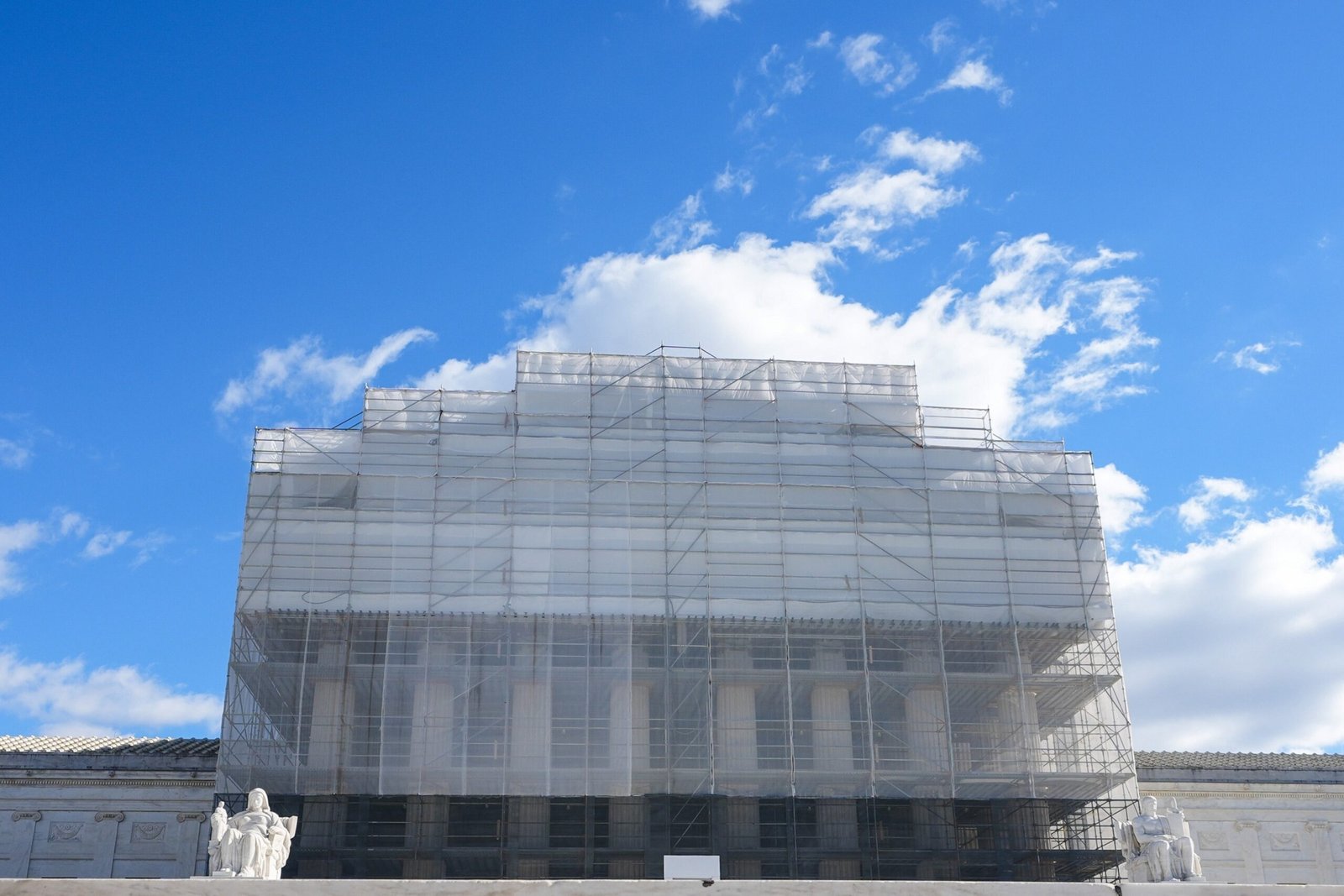
Construction scaffolding remains as construction continues at the U.S. Supreme Court Capitol on Monday, Nov. 17, 2025, in Washington.
Mariam Zuhaib/AP
The company asks the judges to reject the verdict and set limits on contributory liability.
If the ruling is upheld, Cox says it could go bankrupt, potentially eliminating Internet access entirely in some communities and prompting “mass Internet evictions” in places where piracy is suspected, such as “homes, barracks, hospitals and hotels upon a simple accusation.”
Cox says it opposes copyright infringement and takes steps to prevent it, but that it cannot be held responsible for the actions of individual users, who are impossible to identify and trace.
“His [internet service provider] “It is not intentionally involved in or attempting to accomplish what you do online, nor is your telephone company or FedEx in the communications they transmit,” Cox’s attorneys wrote to the high court in a legal brief.
Federal law criminalizes direct infringement of a copyright, but secondary liability of another party involved in copyright infringement (such as Internet service providers) remains an evolving area of law.
As a general rule, anyone who “materially contributes to the infringing conduct of another may be held liable as a contributory infringer,” lawyers for the Motion Picture Association of America (MPAA), an entertainment industry trade group, told the court in a legal brief.
Copyright owners insist that the risk of being sued creates an incentive for Internet service providers to help root out online piracy and suspend the accounts of those suspected of trading in protected material.
“Cox made a deliberate and egregious decision to elevate his own profits above compliance with the law,” Sony Music Entertainment lawyers argue in a legal brief, “providing the means for mass copyright infringement to targeted users he knew were habitual infringers because [it wanted to] to hold on to every subscriber [it] can.”
According to the MPAA, nearly 19 billion downloads of pirated movies and TV shows were made using online peer-to-peer software in 2023. Copyright violations cost the U.S. economy more than $29 billion and “hundreds of thousands of jobs,” the group estimates.
The justices will hear oral arguments on the scope of potential “contributory liability” of Internet service providers on Monday and will issue a decision on the dispute by the end of June 2026.
